NanoTech Launches Roovie, a Physics-Based World Model for Every Building
Roovie gives every building a world model built on validated physics, where AI agents test design, operating and
Press Release Disclaimer: This is a press release distributed through the XPR Media network. It has not been independently verified by our newsroom.


NanoTech Inc. today launched Roovie, which gives every building a world model: a physics-based model of how that specific building behaves, where AI agents can try decisions before anyone makes them for real. Design options, operating changes and capital plans are tested in this proving ground against the owner’s goals, priced, and then checked against the meter, closing the gap between how a building was meant to perform and how it actually does.
This press release features multimedia. View the full release here: https://www.businesswire.com/news/home/20261016233816/en/
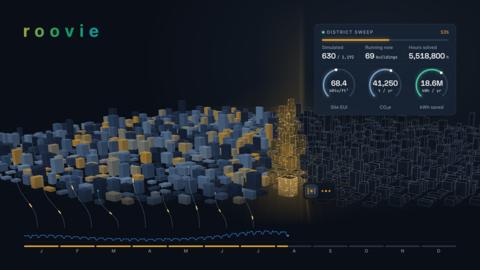
Roovie product image
World models are how robots are learning to work in the physical world: they practice in a simulated world, are rewarded for what works, and only then act. Most of those world models are learned approximations of physics. Roovie’s is the physics itself. And a building’s reward is never a single number. A plan that cuts energy but leaves occupants too hot has failed, and so has one that meets a carbon target but never pays back.
NanoTech didn’t set out to build software. As a materials company developing advanced thermal coatings, it needed to prove what its products save on real buildings, and no available tool was rigorous and fast enough to do it at scale. So it built its own engine.
“Robots learn in a world model before they ever touch the real world. Buildings deserve the same: a place to try every decision before you spend a dollar on it. Roovie gives every building a world model built on real physics, a proving ground where our agents work toward your goals, inside your limits, and show you in real dollars how to get there. Then the meter tells us whether we were right.”
— Mike Francis, CEO and co-founder, NanoTech Inc.
Why it matters
- Models only answer the questions someone thinks to ask. Scenarios are set up by hand over weeks, so few are tested and results arrive after the decision.
- Every team works in a different system. Architects, engineers, energy modelers, owners and operators use tools that don’t talk to each other, so nobody sees how their choices affect anyone else.
- Single-number goals backfire. Cut energy and occupants complain. Chase first cost and operating costs climb for decades.
What it takes to give a building a world model
- The building, as it really is. Each world model has the building’s own geometry, envelope, systems and schedules. Projects start from the plan sets and design files a team already has, or just an address, drawn from a growing global database of pre-captured buildings. AI agents take on the heavy lifting of building the model, so setup takes minutes instead of weeks.
- Real physics. Roovie’s heat balance engine was written from first principles for speed and reliability at scale, validated to ASHRAE Standard 140 and listed on the IBPSA public software list. It simulates every wall, window and system for every hour of the year, fast enough for agents to test scenario after scenario across hundreds of buildings at once.
- Goals that act as the reward. Owners and portfolio managers define success: energy cost, emissions, capital budget, payback, code compliance and portfolio-wide targets. Every scenario is scored against all of them at once.
- Guardrails that can’t be traded away. Comfort, ventilation, code minimums and budget are constraints, not variables. A scenario that saves energy by making occupants uncomfortable is rejected, not ranked.
- Agents that practice in the proving ground. Agents change envelope, systems, controls and upgrades, run the simulations, and show stakeholders which investments to make, and in what order. Nothing changes in the world model until a person approves it, and every change is audited.
- Proven against the meter. Existing buildings are calibrated to 12 months of utility bills against ASHRAE Guideline 14 targets, then compared with building automation and weather data every day. Faults are found and priced, and when the building drifts, the model is recalibrated.
Because load calculations, HVAC sizing, daylight studies, energy and comfort simulations and compliance checks all run from the same world model, the whole team sees how each change affects everyone else. The world model follows a building from first sketch to its next capital plan, and ESCOs, utilities and lenders get savings estimates they can verify and underwrite.
“With Roovie we can model thousands of buildings across a city, campus or real estate portfolio and see exactly where the biggest opportunities to improve performance are. That turns energy analysis from a one-building-at-a-time service into a way to improve performance across the built environment.”
— Nathan Kegel, SVP, Energy Services, NanoTech Inc.
“By simplifying complex building energy modeling workflows, Roovie has the potential to make advanced energy analysis more accessible to a broader range of users, helping overcome traditional barriers such as steep learning curves and specialized industry expertise.”
— Jason LaFleur, Senior Manager, Building Decarbonization, GTI Energy
Availability
Roovie opens today to a select group of beta participants: design, engineering and energy services firms, utilities, and government entities. Apply at www.roovie.com.
About NanoTech Inc.
NanoTech Inc. is an advanced materials and building performance technology company that combines materials science and intelligence to make the built environment more efficient, resilient and cost-effective. Through NanoTech Materials, it develops advanced thermal coatings for energy efficiency, insulation and fire resilience. Roovie gives every building a physics-based world model where AI agents test decisions against owners’ goals before they are made. NanoTech works with Fortune 500 companies and the California Department of Transportation.
View source version on businesswire.com: https://www.businesswire.com/news/home/20261016233816/en/
Media gallery