
What Homeowners Should Know About Carbon Monoxide Alarms
New guidance covers CO sources, alarm placement, testing, and connected detection options. WILMINGTON, Del. - Oct. 5,
Press Release Disclaimer: This is a press release distributed through the XPR Media network. It has not been independently verified by our newsroom.
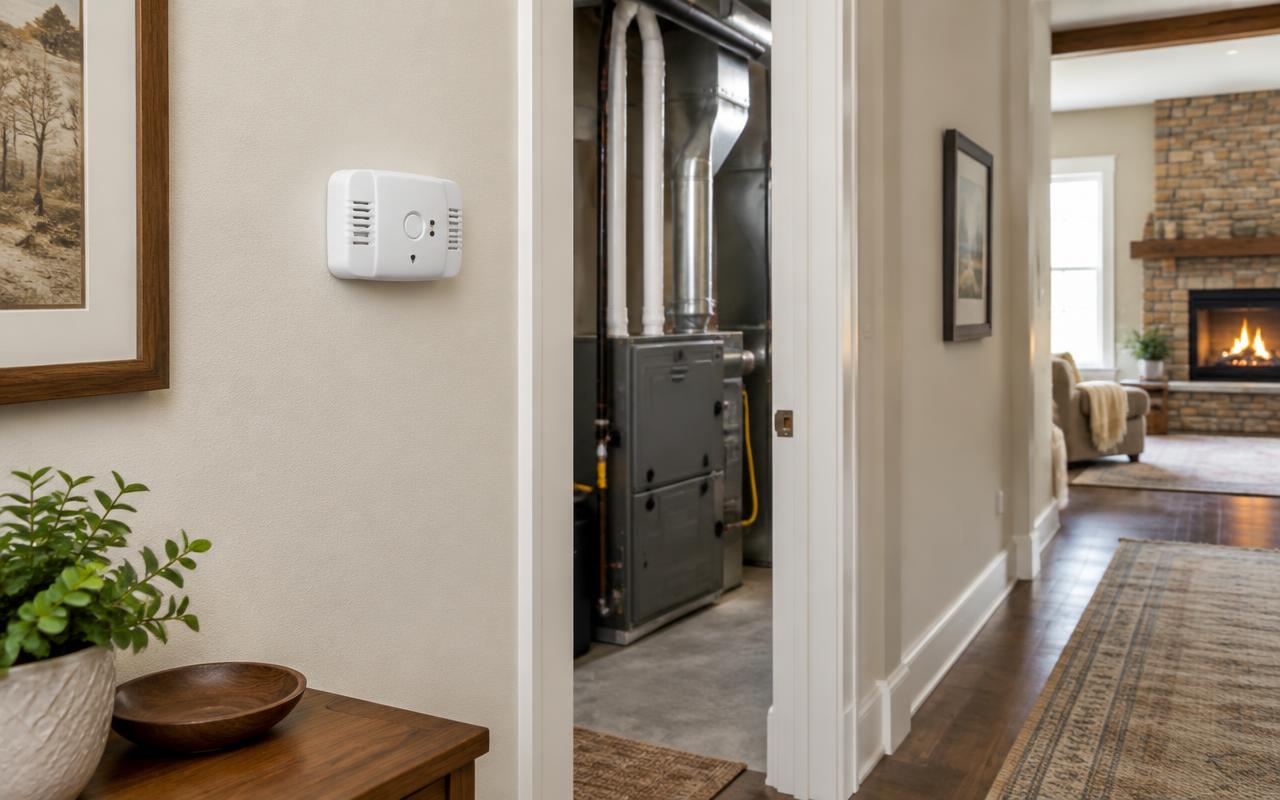

New guidance covers CO sources, alarm placement, testing, and connected detection options.
WILMINGTON, Del. – Oct. 5, 2026 – X-SENSE announces new home safety tips that provide information about the location, maintenance, and the differences between standalone and connected carbon monoxide alarms for homeowners.
CO, also known as carbon monoxide, is a colorless, odorless gas that may form when fuel-burning appliances are used or when there are fireplaces, heating equipment, portable generators, and the exhaust from vehicles in garages attached to the house. Since humans cannot see or smell it, an alarm is a key component to determining if there’s a possible problem within the home.
The guidance notes that carbon monoxide alarm and smoke alarms serve different purposes. A smoke alarm is designed to detect signs associated with fire, while a CO alarm is designed to detect carbon monoxide. Homeowners should not assume a standard smoke alarm also provides CO detection unless the device is designed for both hazards.
Placement is one of the main factors covered in the guide. The U.S. Consumer Product Safety Commission has recommended that every home have CO alarms and be connected to the outside sleeping areas, and that every alarm be installed on a different level of the house as well as following the installation directions provided with the CO alarms. Therefore, other factors such as furniture, curtains, vents, and nearby conditions may influence the placement of a device.
Houses with multiple levels or sizes might require more than one alarm. In such properties, CO warning systems with interconnected systems can be used to warn beyond the room where the CO is first detected. If the alarms are compatible, they can trigger an alert in another of the alarms.
The guide also covers the importance of understanding the difference between wireless interconnection and app connectivity. The capability to communicate directly with compatible devices with some alarms and the capacity to receive app notifications or alarm status information with connected systems. These features can be useful to the person but do not function as an alarm that should be installed in the house.
One example referenced by X-SENSE is the X-SENSE XC01-M smart carbon monoxide alarm. According to company product information, the model connects with the X-SENSE SBS50 base station, supports interconnected alerts and app notifications, uses a replaceable battery, and includes an electrochemical CO sensor. X-SENSE advises homeowners to confirm compatibility before adding devices to an existing alarm network.
Ownership also involves testing and maintenance! The guide says to adhere to the manufacturer’s test guidance, and for any low battery or fault warnings or end-of-life notifications, draw attention. It further refers to CPSC guidelines that suggest testing CO alarms monthly.
X-SENSE states that CO alarms should be incorporated into a comprehensive home safety plan that should include ensuring fuel-burning equipment is properly maintained, emergency plans, and also periodic review of existing alarms.
About X-SENSE Innovations
Founded in 2013, X-SENSE Innovations develops residential fire and home safety products, including smoke alarms, carbon monoxide alarms, heat alarms, combination alarms and connected home safety systems. X-SENSE USA LLC is registered at 1209 Orange St., Wilmington, DE 19801.
More information is available at https://www.x-sense.com/.
Media Contact
Farrukh
X-SENSE
service@x-sense.com
+1 (833) 952-1880
https://www.x-sense.com/


